
A working bakery at 76-01 77th Avenue in Glendale, Queens, NY 11385, sends employees, suppliers, and visitors across its frontage all day, and a mature tree beside the property had spent years pushing roots beneath that walkway. The concrete cracked, lifted, and became uneven, and an NYC DOT sidewalk violation followed.
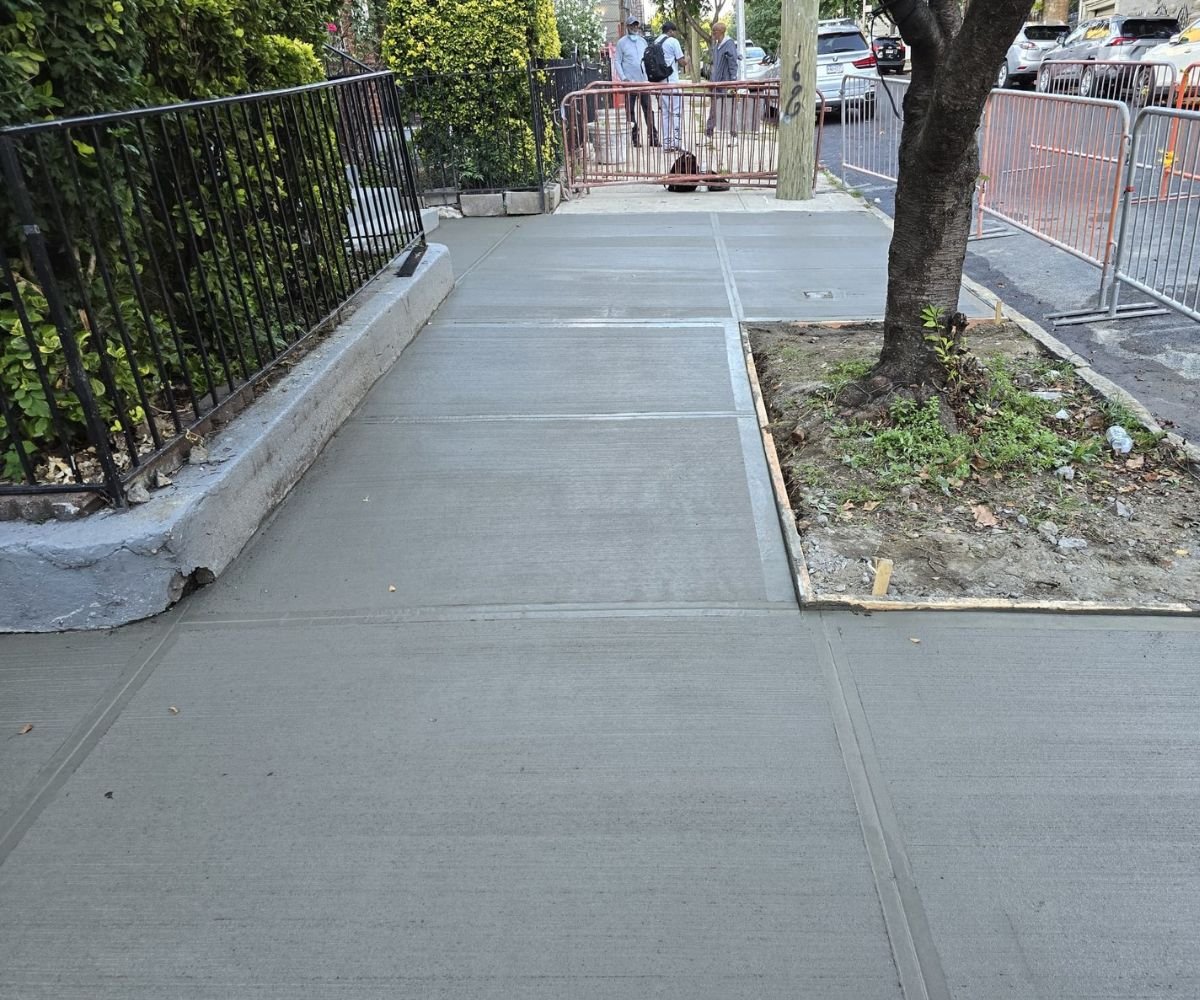
Patching a few slabs would have left new concrete sitting beside the same roots, so the work went further. FY Sidewalk replaced about 9 slabs covering roughly 225 square feet and added tree root pruning and a root barrier so the sidewalk would not be lifted again.
Project Highlights
- Property
- Commercial / industrial bakery facility
- Location
- 76-01 77th Avenue, Glendale, Queens, NY 11385
- Neighborhood
- Glendale, Queens
- Scope
- Multiple slab replacement and NYC DOT violation removal, including tree root pruning and root barrier installation
- Total Area Repaired
- Approximately 9 concrete slabs covering 225 square feet
- Primary Cause
- Mature tree root growth, heavy pedestrian and commercial foot traffic, and general age-related wear and tear, resulting in deteriorated concrete surfaces, potential pedestrian trip hazards, and an NYC DOT sidewalk violation
- Project Cost
- Approximately $4,900, including required permits
- Compliance & Approvals
- NYC DOT Sidewalk Repair Permit, Sidewalk Closing Permit, 811 Utility Mark-Out Ticket, and NYC Parks Tree Work Permit
- Timeline
- Up to 60 days, including permit coordination, demolition and replacement of the damaged sidewalk slabs, DOT dismissal inspection, and final violation sign-off
Why the Sidewalk Failed
The sidewalk outside 76-01 77th Avenue was wearing down from above and below. On the surface, staff, vendors, and visitors crossed it throughout the working day. Underneath, the roots of a mature tree kept expanding and pushing the slabs upward.
Over time the frontage developed cracked, tilted, and uneven sections. Some slab edges had risen enough to catch a foot, and the conditions eventually led to an active NYC DOT sidewalk violation.
With 9 slabs and about 225 square feet affected, a spot repair would have put fresh concrete directly beside the same roots. Replacing the damaged section and controlling the roots offered a longer-lasting result.
Our Repair Process
Site Walk-Through and Root Evaluation
The crew inspected the full frontage, including the building entrance, the tree location, and the neighboring pavement. We marked the slabs that had cracked or lifted and traced where the roots were doing the most damage. Existing grades and walking paths were checked so the new concrete would meet the adjoining sidewalk cleanly.
Permit and Approval Coordination
Before work began, FY Sidewalk secured an NYC DOT Sidewalk Repair Permit, a Sidewalk Closing Permit, and an 811 Utility Mark-Out Ticket. Since the roots of a street tree were involved, we also obtained an NYC Parks Tree Work Permit. Having every approval in place first kept the project compliant and moving toward the DOT dismissal inspection.
Breaking Out the Damaged Concrete
Once permits were issued, the crew demolished and hauled away the 9 damaged slabs. With the concrete gone, the base and the roots were exposed, showing how much the tree had disturbed the ground beneath the walkway.
Pruning the Roots and Installing the Barrier
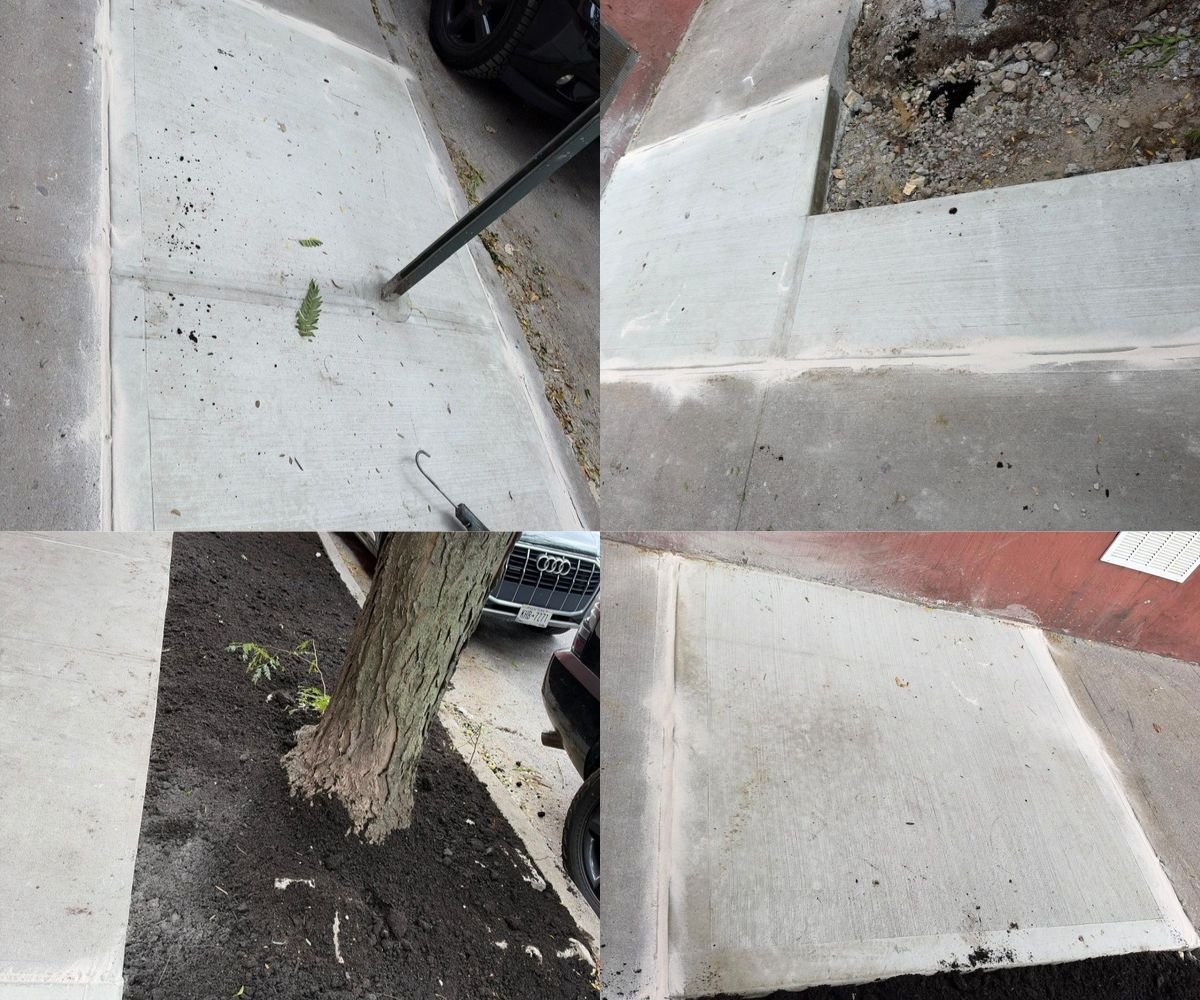
Roots interfering with the sidewalk were pruned under the Parks permit, with care taken not to harm the tree unnecessarily. A root barrier was then set along the edge of the new sidewalk to direct future growth downward and away from the concrete. This step is what keeps the repair from heaving again in a few years.
Compacting the Base and Setting Grades
The base was leveled and compacted to carry the new slabs. Grades were verified so the finished surface would tie into existing pavement without lips, dips, or sudden changes in height, which is important in front of a facility with regular workplace traffic.
Placing and Finishing the New Slabs
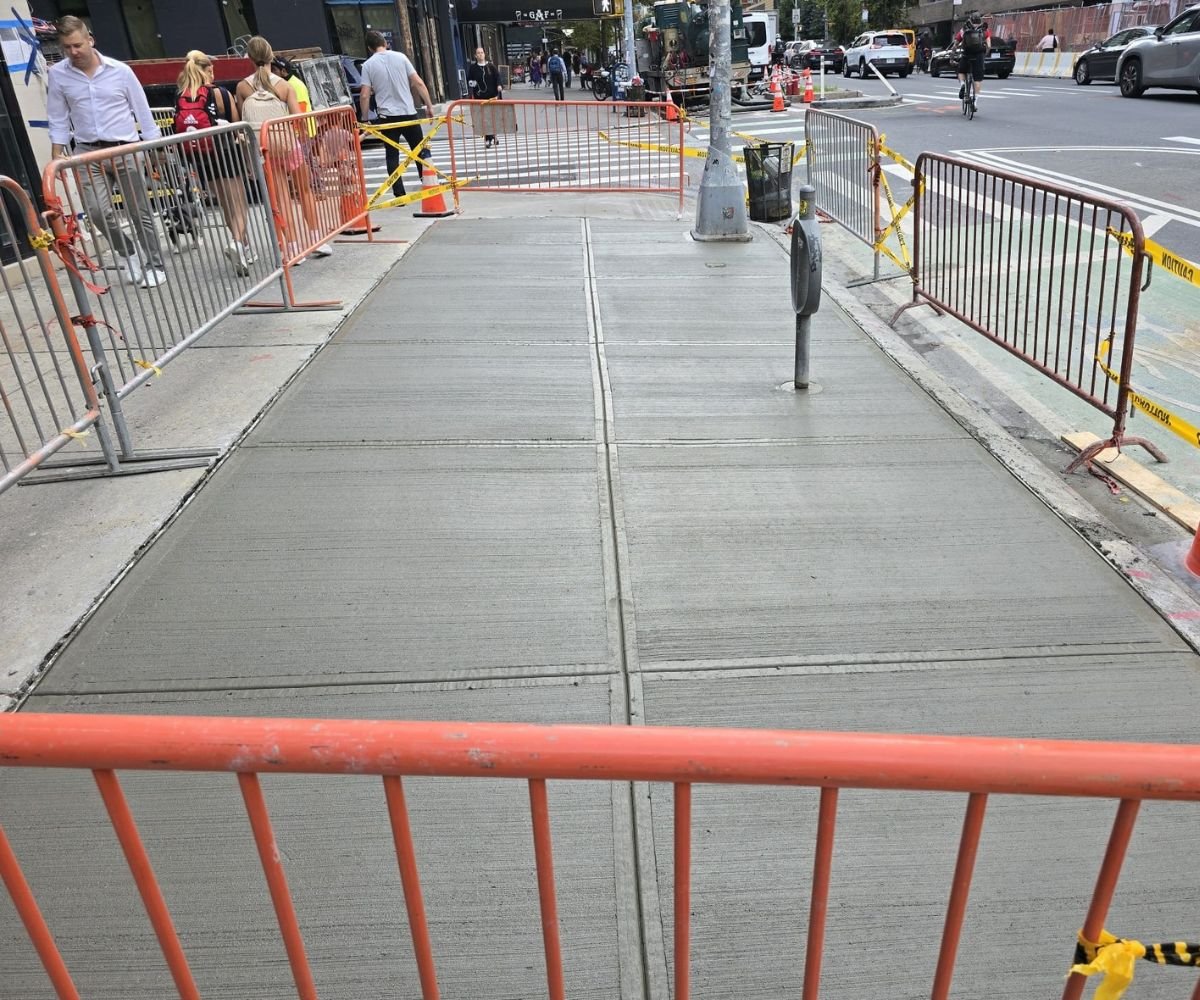
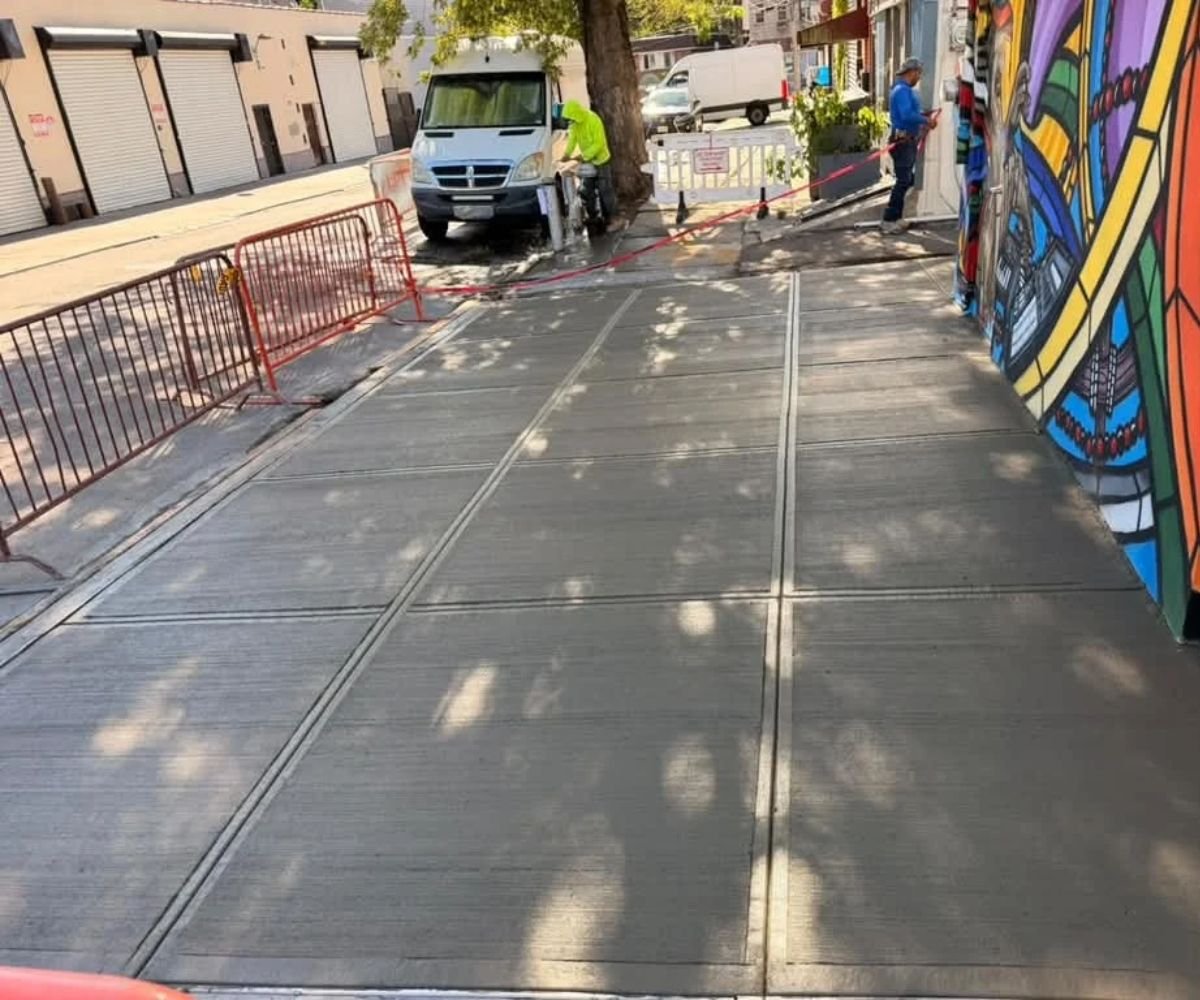
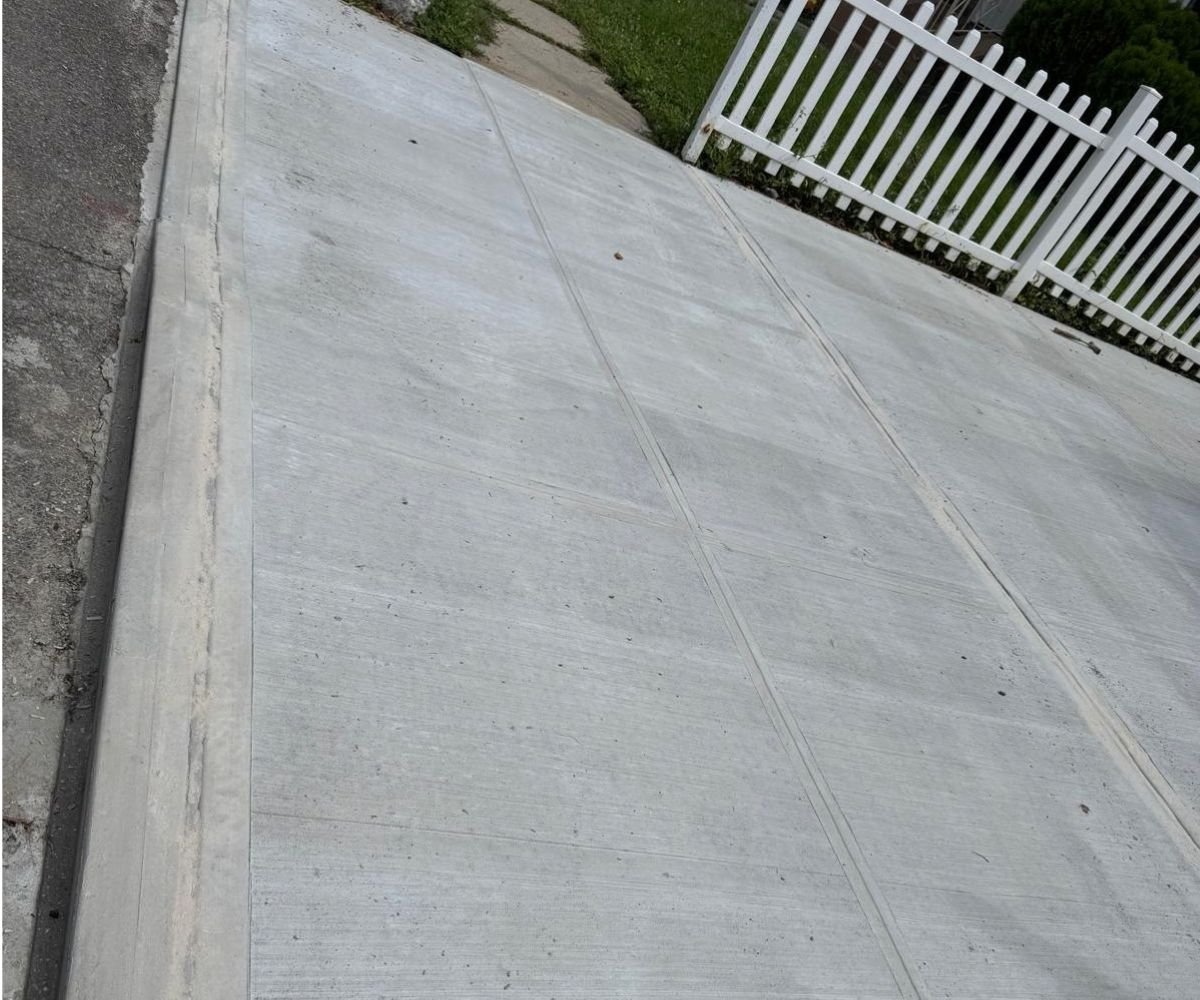
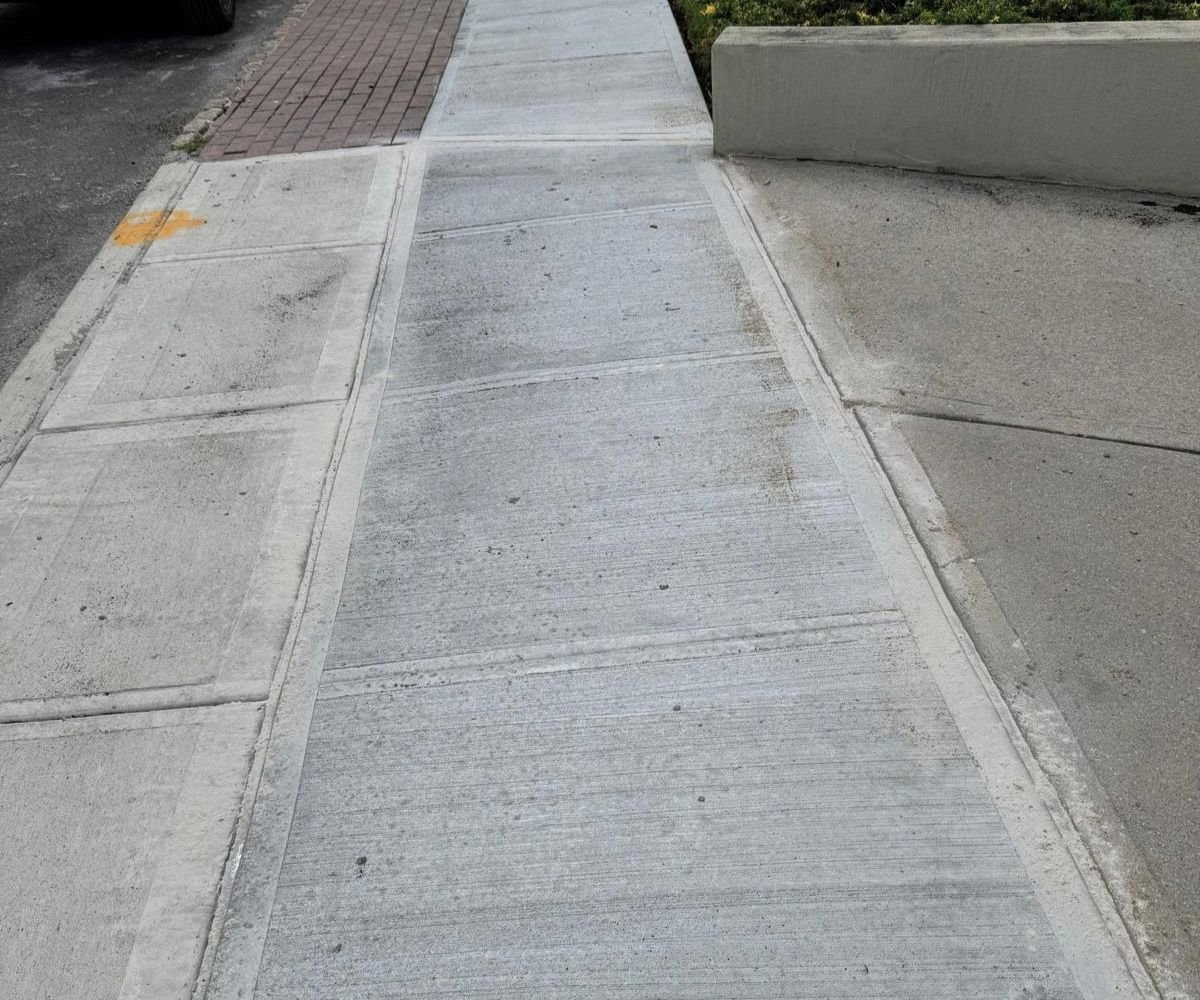
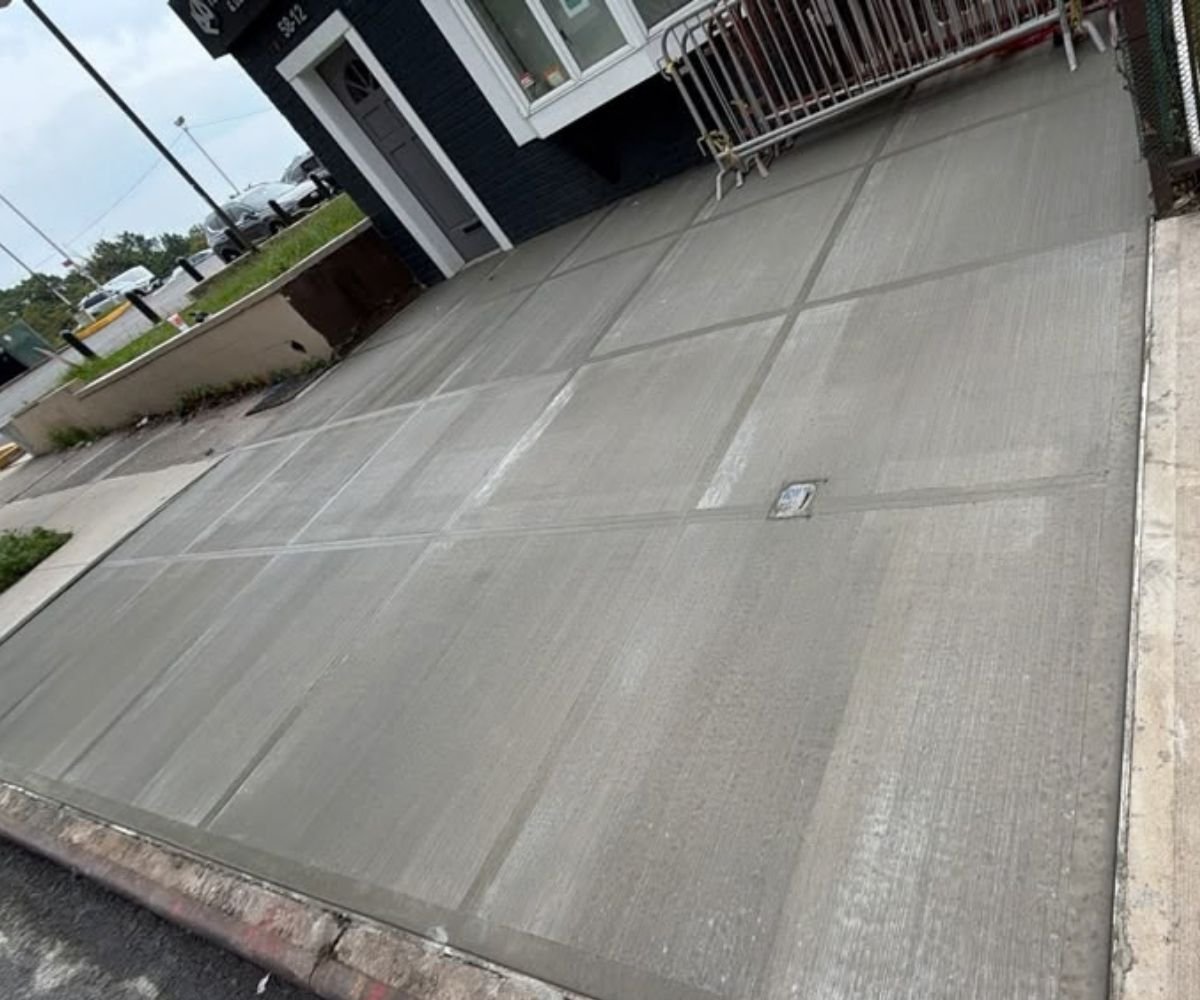
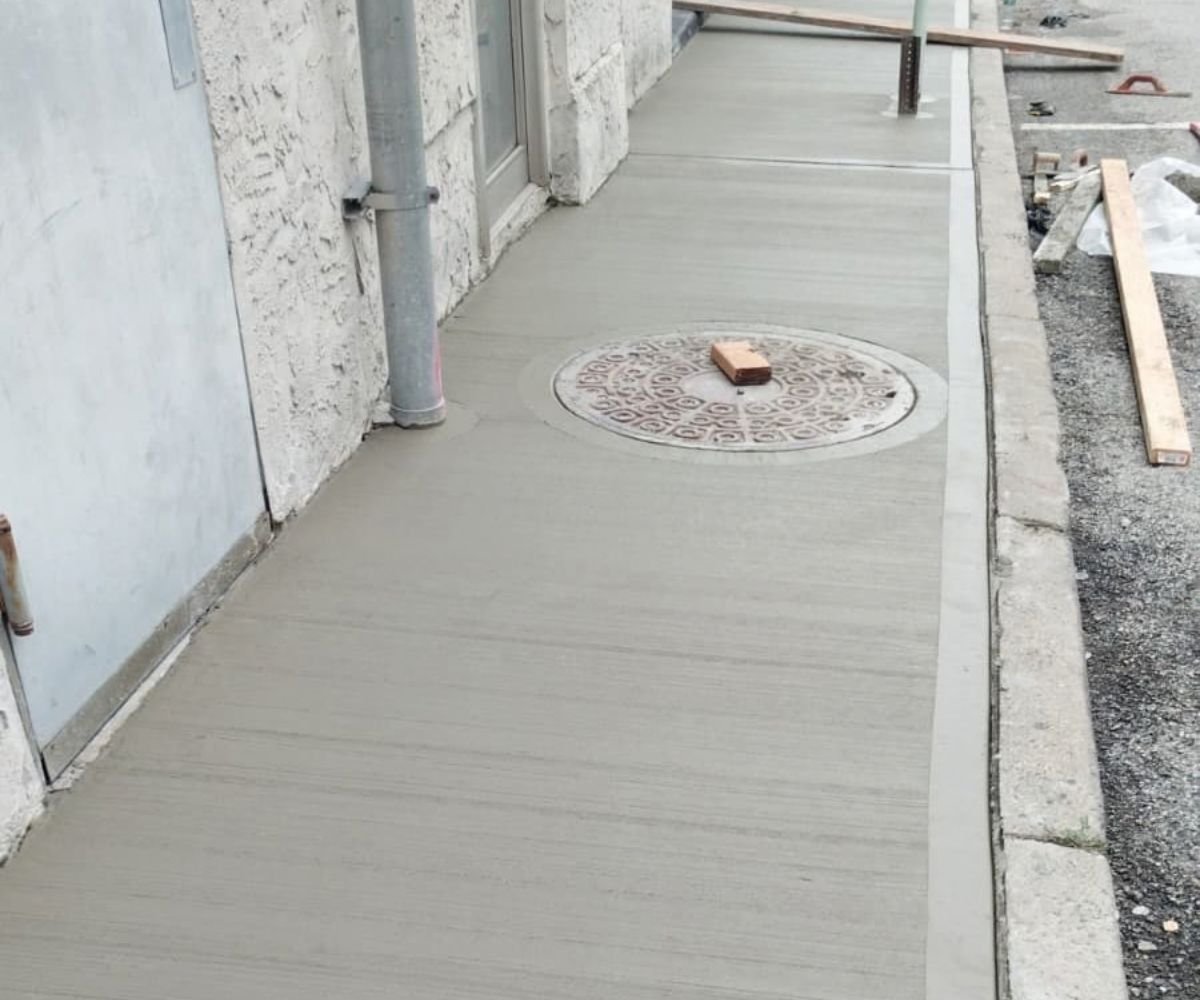
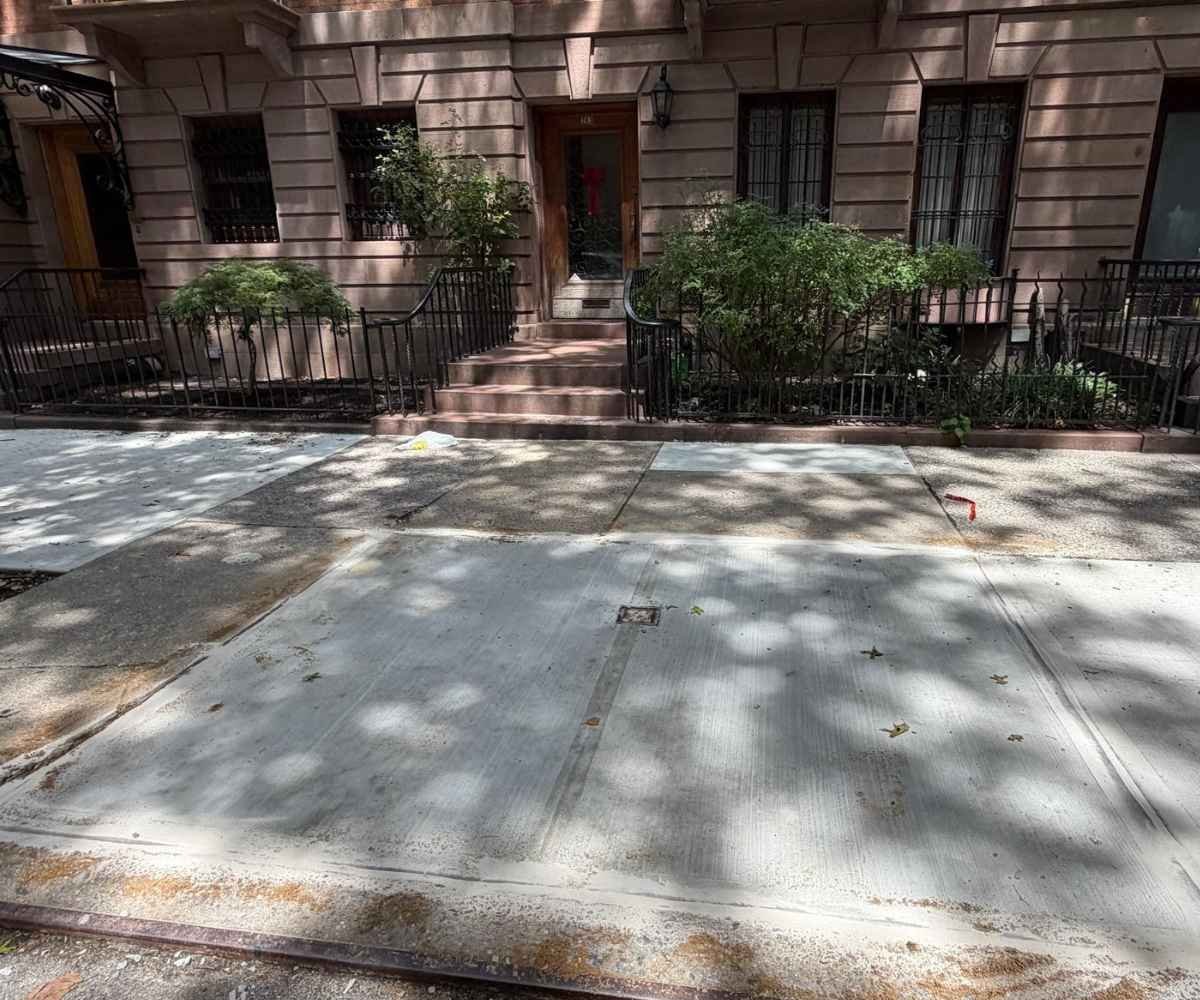
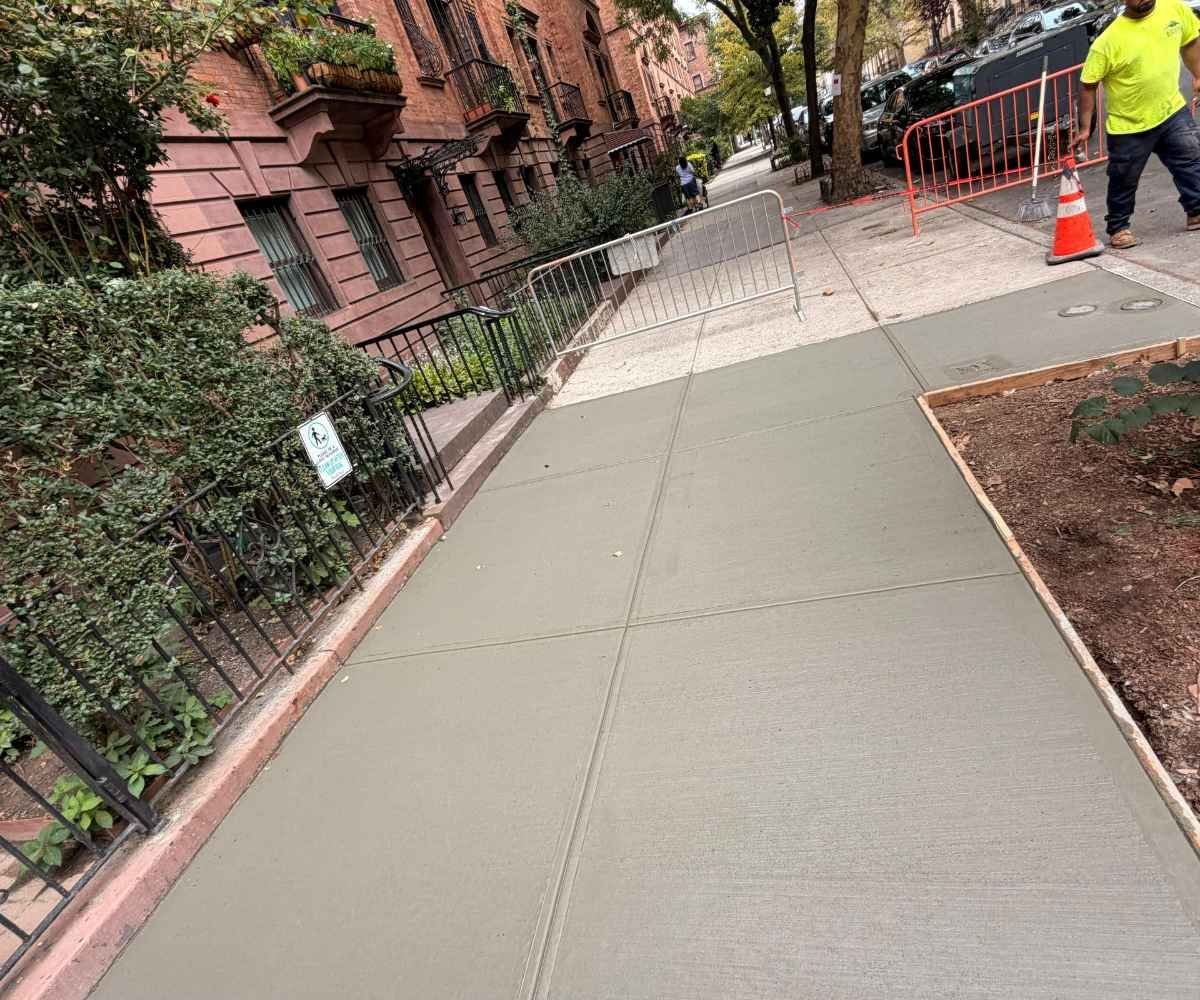
Fresh concrete was poured across approximately 225 square feet, replacing all 9 affected slabs. The new sections were aligned with the surrounding sidewalk and given a slip-resistant finish. Control joints were cut to allow for normal expansion and limit future cracking.
Clearing the Work Zone
After the concrete cured, the crew removed debris, forms, and equipment, and the sidewalk reopened to pedestrians and workers.
DOT Dismissal Inspection and Final Sign-Off
FY Sidewalk then arranged the DOT dismissal inspection and final violation sign-off, completing the compliance process. From permitting through construction, inspection, and sign-off, the project took up to approximately 60 days.
Services Delivered at the Facility
- Multiple slab replacements
- Demolition and disposal of damaged slabs
- Tree root pruning
- Root barrier installation
- Base preparation and compaction
- Grading and elevation correction
- New concrete placement
- Control-joint finishing
- NYC DOT permit coordination
- Sidewalk Closing Permit handling
- NYC Parks Tree Work Permit coordination
- 811 Utility Mark-Out coordination
- DOT dismissal inspection coordination
- Violation-clearance assistance
- Jobsite cleanup
Why Replacement and Root Control Were the Right Call
With deterioration across 9 slabs, fixing only the worst spots would have left a mismatched surface, and the roots would have kept lifting whatever concrete sat beside them. Replacing the full affected section and adding a root barrier let the crew correct the concrete, the base, and the source of the damage in a single project.
Why This Repair Mattered for a Working Facility
A commercial bakery depends on a safe approach for the people who keep it running, including employees arriving for shifts, suppliers making drop-offs, and visitors coming to the door. Raised or broken slabs were a trip hazard for all of them and had already resulted in a DOT violation, which can create liability concerns for a business property.
The new frontage cleared the violation, made the walkway safer for daily use, and gave the facility a neater, more professional entrance on 77th Avenue.
Project Results
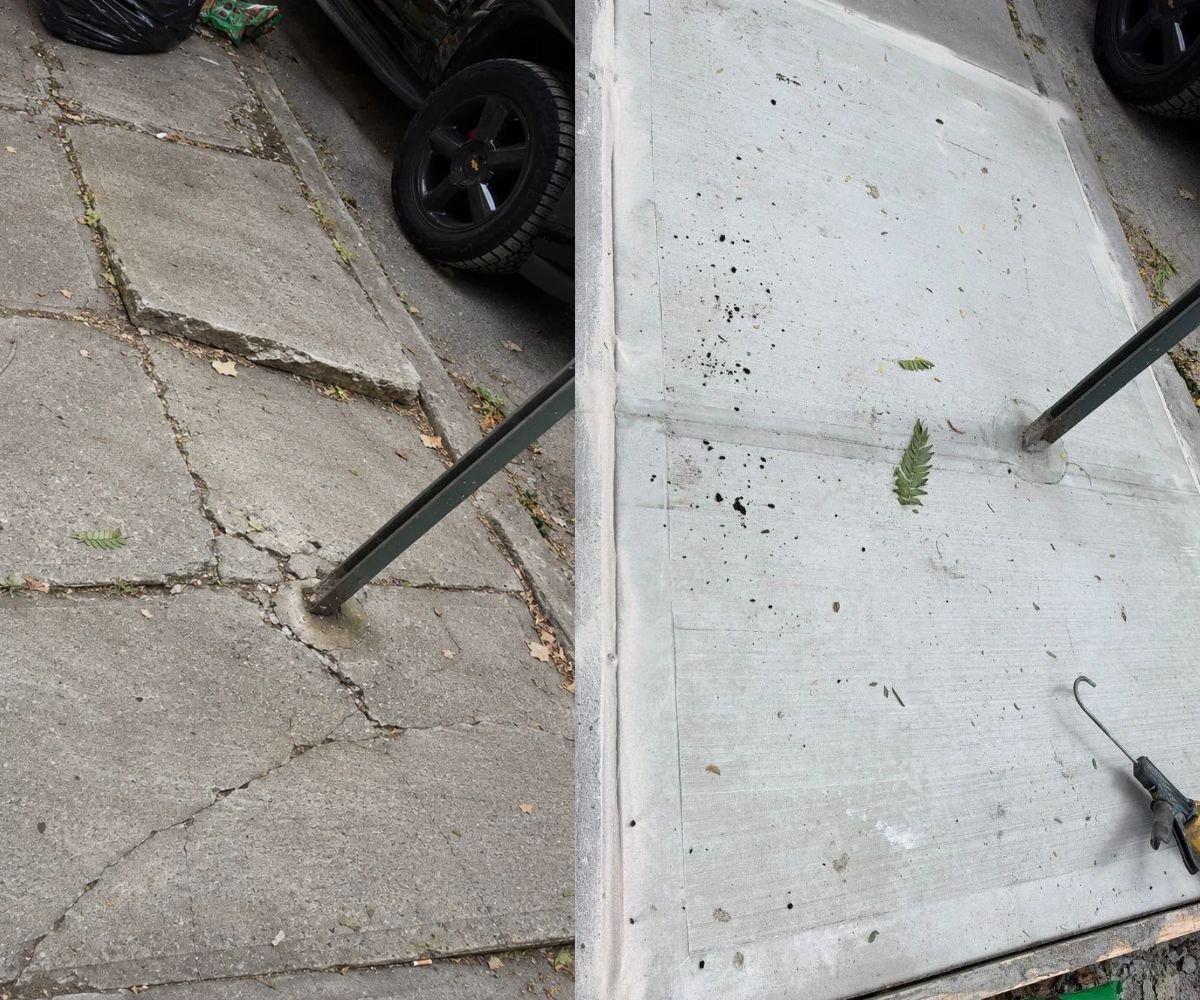
We restored approximately 225 square feet of sidewalk across 9 concrete slabs and installed a root barrier to protect the new work from the tree. The finished walkway now offers a smoother, more even surface for staff, vendors, and passersby.
The total project cost, including permits, came to approximately $4,900. From permitting through construction, inspection, and final violation sign-off, the process took up to approximately 60 days.
What the Facility Representative Said
“Between the tree roots and the constant activity around the building, our sidewalk had gotten rough, and then we were hit with a DOT violation. FY Sidewalk took care of the permits, including the one for the tree, replaced the broken slabs, handled the roots, and followed through until the violation was cleared. The walkway in front of our facility is far safer now.”
— Facility Representative, Glendale, Queens
Need Sidewalk Repair or Violation Removal in Glendale or Elsewhere in Queens?
Tree roots and everyday traffic can break down a sidewalk slowly, but once several slabs are cracked or raised, full replacement with root control is often the longer-lasting solution. Our licensed Queens sidewalk repair experts at FY Sidewalk manage the entire process, from inspection and permit coordination through demolition, root pruning, concrete installation, DOT dismissal inspection, and violation-clearance assistance.
Have cracked, lifted, or uneven sidewalk concrete at your commercial property? Contact us today to schedule an inspection and receive a free sidewalk repair estimate.