
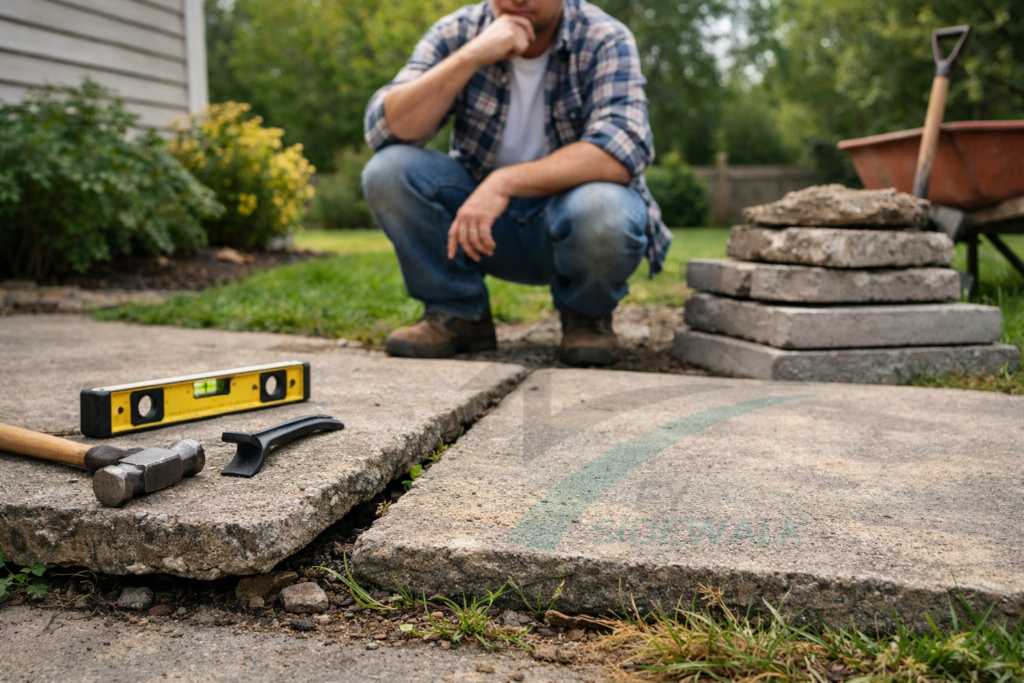
You should choose a repair if your sidewalk slab is still strong underneath, even if it has a few cracks. Repair methods like lifting the slab or smoothing the surface are usually faster, cheaper, and much less disruptive than tearing everything out. These fixes work best when the slab has moved slightly because the soil shifted, or when weather changes like freezing and thawing caused the slab to sink.
However, if the concrete slab is badly damaged, with large cracks, broken edges, or pieces that are uneven and falling apart, repairs won’t last. In those cases, replacing the entire slab is the safest and most reliable option. When damage goes that far, only a full replacement can provide a solid and long-lasting surface.
At FY Sidewalk, we’ve seen all kinds of sidewalk problems over the past twenty-five years. We understand how confusing it can be to decide whether a slab is worth fixing or if it really needs to be replaced. That’s exactly why we created this guide: to help you clearly understand when a simple repair will do the job and when a full replacement is the smarter choice.
Let’s break it down.
When to Repair an Uneven Slab
If your concrete looks worn but not completely broken, repairs can save you time, money, and stress. Here are the situations where repairing makes the most sense:
Minor Settling
Sometimes a slab sinks a little because the ground underneath shifts. If the concrete is still solid and not cracked all the way through, this is usually an easy fix. Repair methods like mudjacking or foam lifting raise the slab back to its original level, making it safe and even again. There’s no need to break or remove the concrete; just lift it, fill the space below, and you’re done.
Many people think any uneven slab needs to be replaced, but small settling issues are actually one of the easiest problems to fix.
Surface Wear
Light cracks, small chips, or faded color don’t always mean the concrete is failing. If the slab is still strong, these surface problems can be fixed with crack filling, patching, or resurfacing. These repairs improve the look and safety of the sidewalk without replacing it.
In many cases, a new surface layer can make an old slab look almost brand new, at a much lower cost than pouring new concrete.
Structural Soundness
The most important question is simple: does the slab still feel solid?
- No hollow sounds
- No deep or wide cracks
- No loose or breaking pieces
If the slab feels firm and stable, repairs are a safe and smart option. You’re fixing small issues before they turn into big problems, not covering up serious damage.
Overall, repairs are ideal when you want a quick, affordable solution that makes your sidewalk level, safe, and good-looking, without the noise and mess of a full replacement. Think of repairs as basic maintenance that keeps small problems from getting worse.
When to Replace the Slab Completely
There are times when repairs just won’t work. If the concrete is too damaged, replacing the slab becomes the better and more cost-effective choice.
Crumbling or Surface Flaking
If pieces of concrete are coming off easily, or the surface is peeling away in layers, the slab has become weak. Trying to patch this kind of damage is only a short-term fix. The concrete no longer has the strength needed to support repairs.
In these cases, replacement is the only way to make sure the sidewalk is safe and durable again.
Large and Spreading Cracks
Small cracks are normal and usually harmless. But big or deep cracks more than ¼ inch that run across the slab, or several cracks that connect, are signs of deeper problems. These cracks often mean the slab or the ground beneath it is failing.
Filling these cracks won’t stop future movement. Replacing the slab allows contractors to start fresh with a stable base and properly poured concrete.
Problems with the Base
If the soil under the slab has washed away, was never packed properly, or keeps moving, repairs will never last. Even strong concrete will crack and sink without proper support.
Replacing the slab gives contractors the chance to rebuild the base correctly, improve drainage, and make sure the new concrete has solid ground beneath it.
Old Age and Heavy Use
Concrete doesn’t last forever. If a slab is very old and has been repaired many times, replacement can be cheaper in the long run. Constant patching adds up and often doesn’t look good.
New concrete lasts longer, looks cleaner, and uses modern materials that handle weather and wear much better.
Replacement is the right choice when you want a strong, safe sidewalk that won’t need constant fixes. It costs more at first, but it saves time and money later.
Why the Right Choice Matters
Choosing the wrong option may result in higher cost.
- Repairing a slab that should be replaced leads to repeated cracks and sinking.
- Replacing a slab that only needed a small repair wastes money and causes unnecessary work.
That’s why it’s best to have experienced sidewalk professionals like FY Sidewalk inspect the slab first. A trained eye can quickly tell whether a repair will last or if replacement is the smarter move. The goal is always the same: a safe, level sidewalk without spending more than needed.
Conclusion
Sidewalk slabs are strong, but they don’t last forever. If the slab is only slightly uneven or has minor surface damage, repairs are usually the fastest and most affordable solution. But if the damage is deep, widespread, or caused by problems underneath, replacement is the only fix that truly lasts.
Think of repairs as a simple tune-up and replacement as a fresh start. Both have their place, and choosing the right one helps keep your sidewalk safe for years to come.
If you’re unsure what your slab needs, contact FY Sidewalk for a quick consultation. Our experienced team will help you understand your options and choose the solution that offers the best long-term value.

