Sidewalk repair in NYC usually costs $5 to $12 per square foot for minor repairs and $10 to $25 per square foot for standard concrete replacement. For most property owners, a small repair may cost around $500 to $1,500, while a larger sidewalk replacement can cost $1,500 to $4,000 or more.
The final price usually becomes clear after the sidewalk is inspected. This is where a local sidewalk repair team like FY Sidewalk can help. They can check the damage and explain the right repair option. They also provide free on-site estimates and handle the permit process when needed.
Sidewalk work in NYC involves more than replacing broken concrete. Property owners are responsible for keeping the sidewalk next to their property safe. If the sidewalk has cracks, lifted flags, holes, loose sections, or drainage problems, the NYC Department of Transportation may issue a sidewalk violation.
NYC Sidewalk Repair Cost by Type
| Type of sidewalk work | Average cost in NYC |
|---|---|
| Small crack filling | $3 to $8 per linear foot |
| Minor patching | $5 to $12 per square foot |
| Sidewalk grinding | $6 to $12 per square foot |
| Standard concrete repair | $10 to $18 per square foot |
| Full concrete replacement | $10 to $25 per square foot |
| Small slab or flag replacement | $1,500 to $4,000 or more |
| Large sidewalk replacement | $3,000 to $8,000 or more |
| Bluestone sidewalk replacement | $25 to $50 per square foot |
| NYC sidewalk repair permit | About $70 for up to 300 linear feet |
These are average working ranges for NYC. The exact price usually becomes clear after the sidewalk is checked in person. A small crack is not priced the same way as a lifted sidewalk flag caused by tree roots.
Why Sidewalk Repair Costs More in NYC
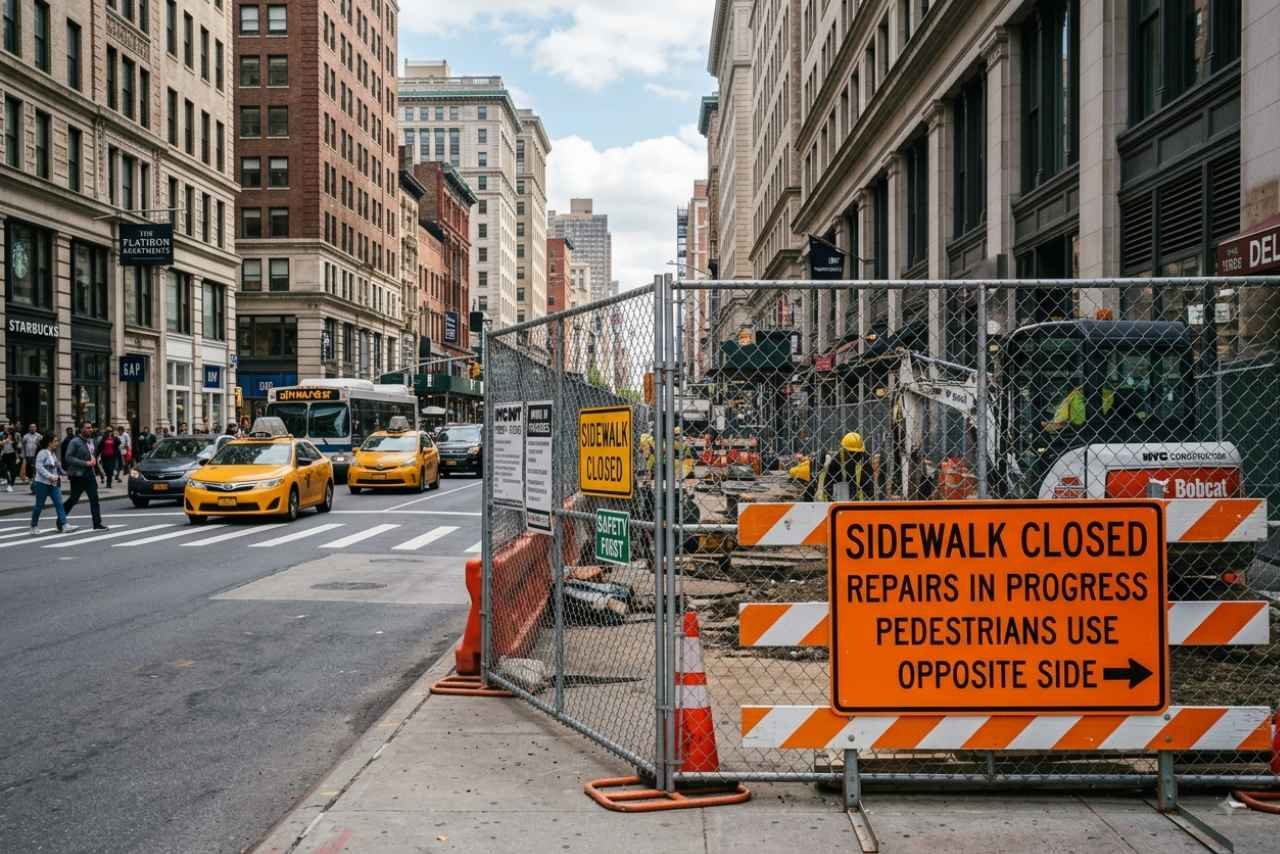
Sidewalk repair in New York City can cost more than in many other places because the work is more complicated. Contractors often have to deal with tight streets, parking issues, pedestrian traffic, tree roots, DOT rules, permit requirements, and disposal of old concrete.
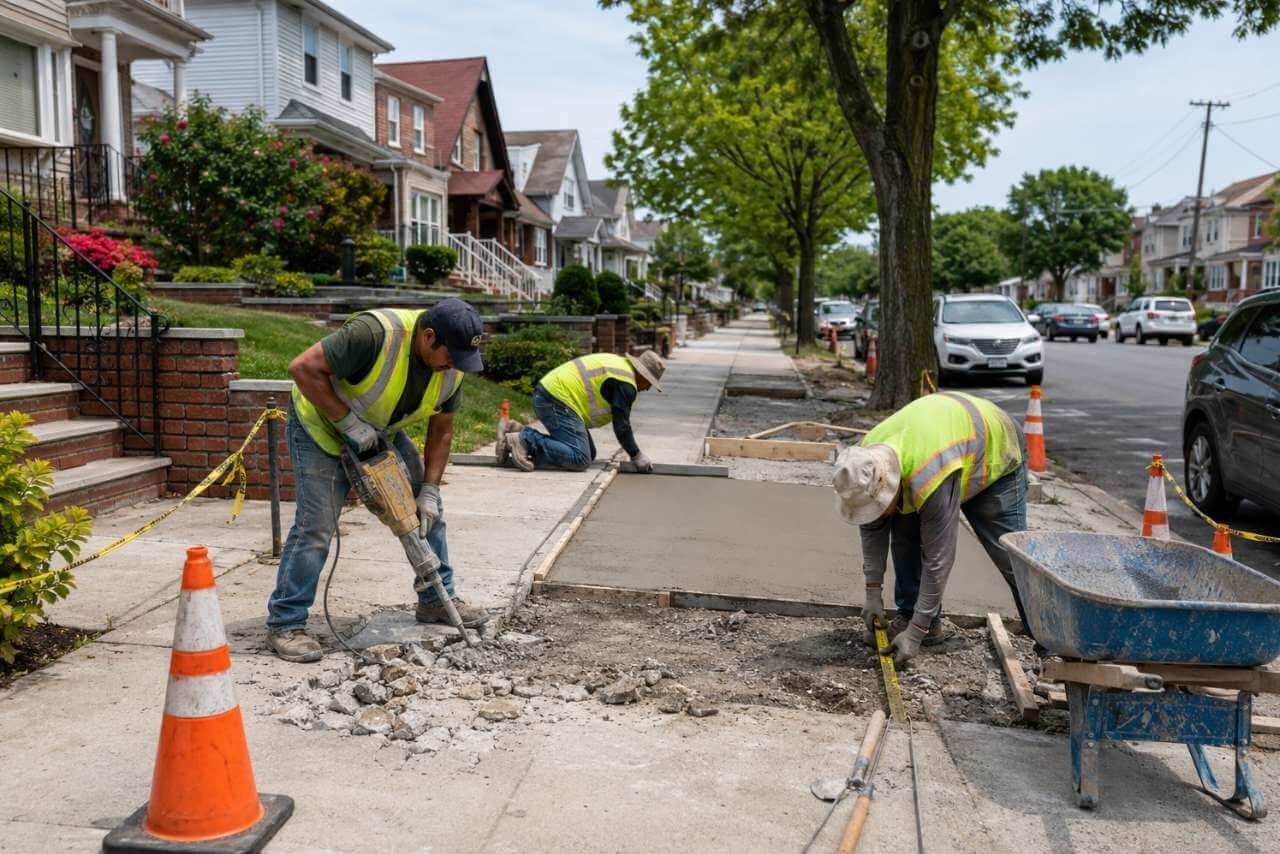
A simple repair may look easy from the outside. But in NYC, the contractor may need to remove broken concrete, prepare the base, pour new concrete, match the sidewalk level, protect pedestrians, and make sure the work meets city standards.
That is why the cheapest quote is not always the safest choice. If the repair does not meet DOT requirements, the violation may not be dismissed.
What Affects the Cost of Sidewalk Repair in NYC?
1. Size of the damaged area
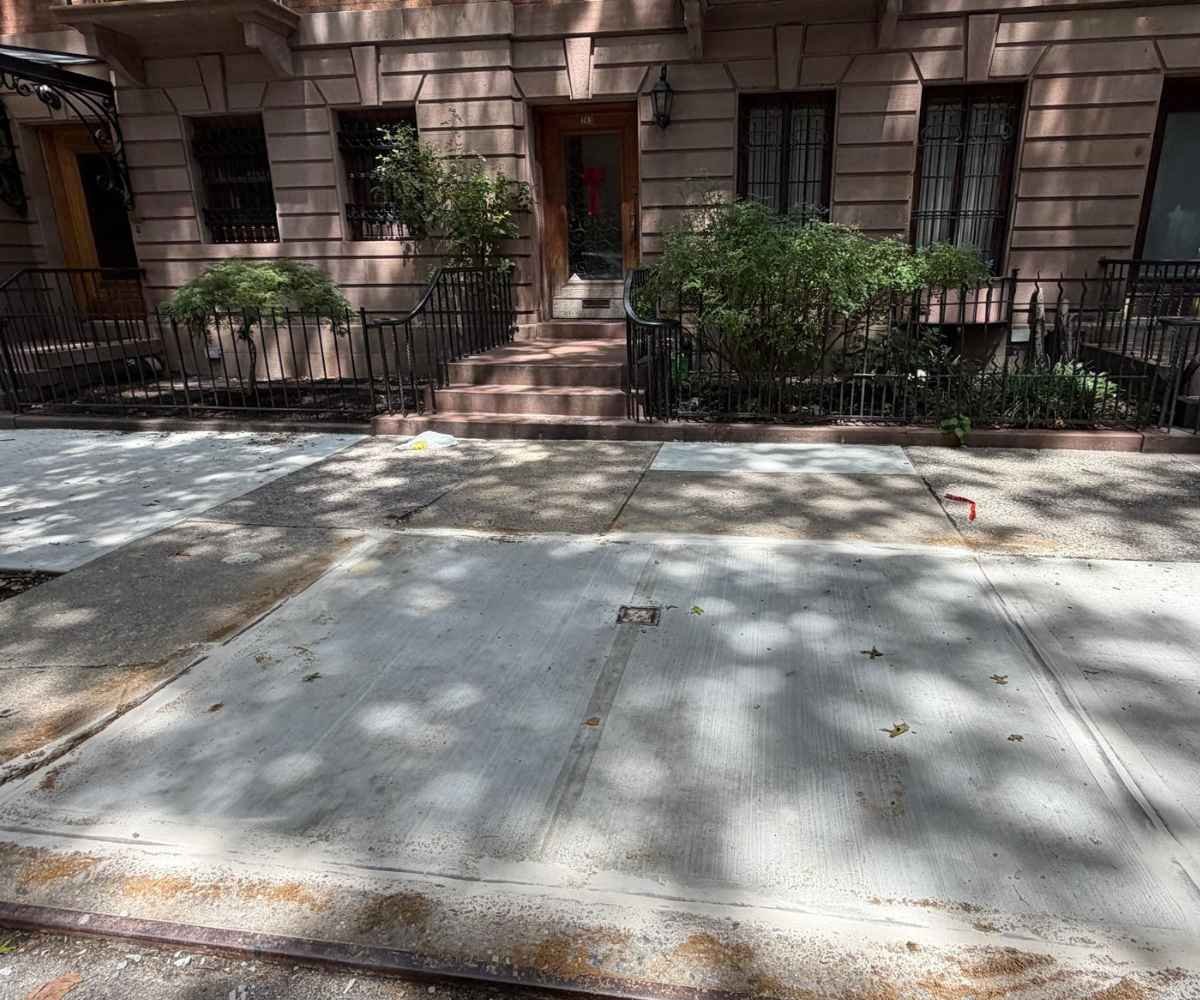
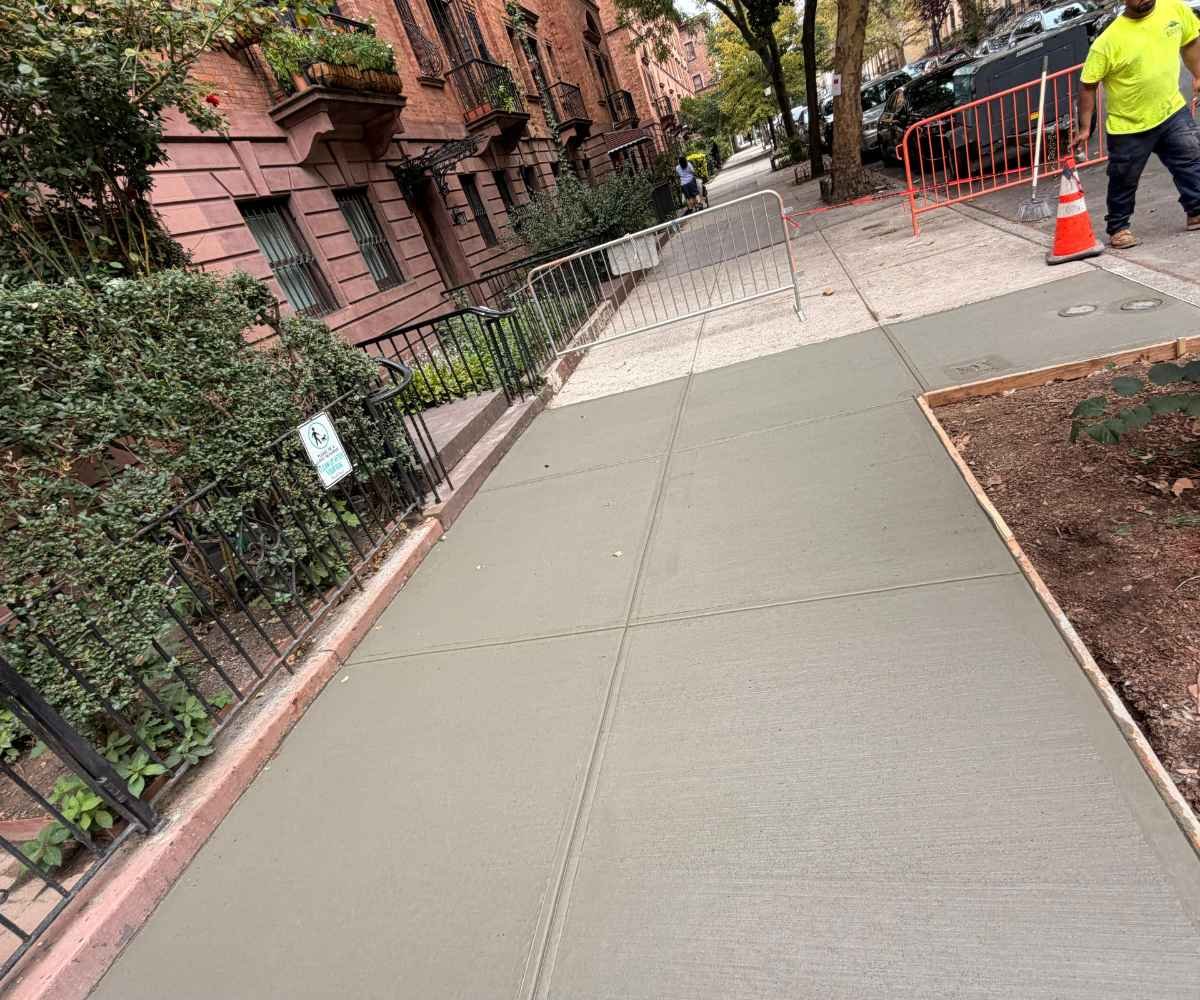
The larger the damaged area, the higher the cost. In NYC, a sidewalk is usually divided into concrete sections known as flags. If only one flag is damaged, the cost may stay low. If several flags are cracked, lifted, or uneven, the price can increase quickly.
A small repair may only involve one or two sections. A bigger job may require removing and replacing a long part of the sidewalk.
2. Type of damage
Not all sidewalk damage needs the same repair.
Small surface cracks may be filled. Uneven edges may sometimes be grinded down. But deep cracks, missing pieces, loose sections, and badly lifted flags often need full replacement.
If the sidewalk is raised by tree roots, the job can become more expensive. The repair must be planned carefully so the roots, tree, and new sidewalk are all protected.
3. DOT violation status
If you received a DOT sidewalk violation, the repair must address the exact defects listed in the notice. A small surface fix may not solve the actual defect.
In many cases, property owners have 75 days to repair the sidewalk after receiving a violation. If the work is not done, the City may repair it and bill the property owner.
There is no direct fine just for receiving a sidewalk violation, but the violation stays on record until it is dismissed. A dismissal inspection is usually needed after the repair is complete.
4. Permit cost
Most sidewalk repair work in NYC needs a DOT sidewalk construction permit. The permit cost is usually about $70 for up to 300 linear feet of sidewalk for one property.
If the property is on a corner and work is being done on both sides, two permits may be needed.
In most cases, the contractor applies for the permit before the work starts. This is important because starting work without the right permit can create more problems.
5. Concrete thickness
Standard sidewalk concrete is usually less expensive than heavy duty concrete. Driveway sections often need stronger concrete because they carry vehicle weight. This can increase the cost because more material and labor are needed.
6. Tree roots
Tree roots are one of the most common causes of sidewalk damage in NYC. Roots can lift the sidewalk and create a trip hazard.
If the damage is caused only by a City tree next to a one, two, or three family property, the City may handle it differently than other sidewalk defects. But for commercial buildings, vacant lots, and four or more unit properties, tree root related sidewalk damage is usually still the property owner’s responsibility.
Because tree work can be sensitive, do not let a contractor cut roots without proper guidance. Damaging roots can harm the tree and may create city issues.
7. Material type
Most NYC sidewalks are concrete, but some areas have bluestone or other special materials. Bluestone is common in some older and historic neighborhoods. It looks better, but it costs more to replace.
A standard concrete sidewalk is usually the most affordable option. Bluestone can cost much more because the material and installation are more expensive.
Does NYC Charge a Fine for a Sidewalk Violation?
NYC does not usually charge a direct fine just for issuing a sidewalk violation. But the violation is still serious.
The problem is that the violation remains on record until the sidewalk is repaired and dismissed. If the owner does not repair the sidewalk in time, the City may complete the work and bill the property owner.
This can cost more than hiring a private contractor. It can also create stress during a property sale, refinance, insurance review, or tenant complaint.
Can You Repair a Sidewalk Yourself in NYC?
A private homeowner may be able to apply for a sidewalk repair permit and do the work themselves. But if you hire a contractor, the contractor must be registered with NYC DOT and must take out the permit.
For most property owners, hiring a licensed contractor is the safer option. NYC sidewalk work has to meet DOT standards. If the repair is not done correctly, you may still have the same violation after the work is finished.
Also, any contractor doing sidewalk repair work costing more than $200 should have a Home Improvement Contractor License from the NYC Department of Consumer and Worker Protection.
How to Keep Your Sidewalk Repair Cost Lower
The best way to control cost is to repair the problem early. A small crack can become a bigger break. A slightly raised flag can become a trip hazard. Tree root damage can spread across more sections.
Get the price in writing before the repair starts.
Ask what is included in the price. The estimate should explain the repair area, concrete removal, disposal, new concrete, permit handling, and cleanup.
Also ask whether the contractor helps with violation dismissal. This matters if DOT has already issued a violation.
Is Sidewalk Repair Worth It?
Yes, sidewalk repair is worth it because it protects your property, reduces trip hazards, and helps avoid issues with the City. In NYC, damaged sidewalks are not something property owners should ignore.
A repaired sidewalk also improves curb appeal. It makes the property look safer, cleaner, and better maintained.
More importantly, it helps reduce the risk of injuries. Even a raised sidewalk flag of about half an inch can become a hazard for pedestrians.
Final Answer
The cost to repair a sidewalk in NYC usually starts around $5 to $12 per square foot for minor repairs and can reach $10 to $25 per square foot for full concrete replacement. Most small jobs cost around $500 to $1,500, while larger sidewalk repairs or replacements can cost $1,500 to $4,000 or more.
If there is a DOT violation, tree root damage, driveway concrete, corner property work, or bluestone replacement, the cost can be higher.
The smartest step is to get the sidewalk inspected early, compare written estimates, and hire a licensed NYC sidewalk contractor who understands DOT rules.