
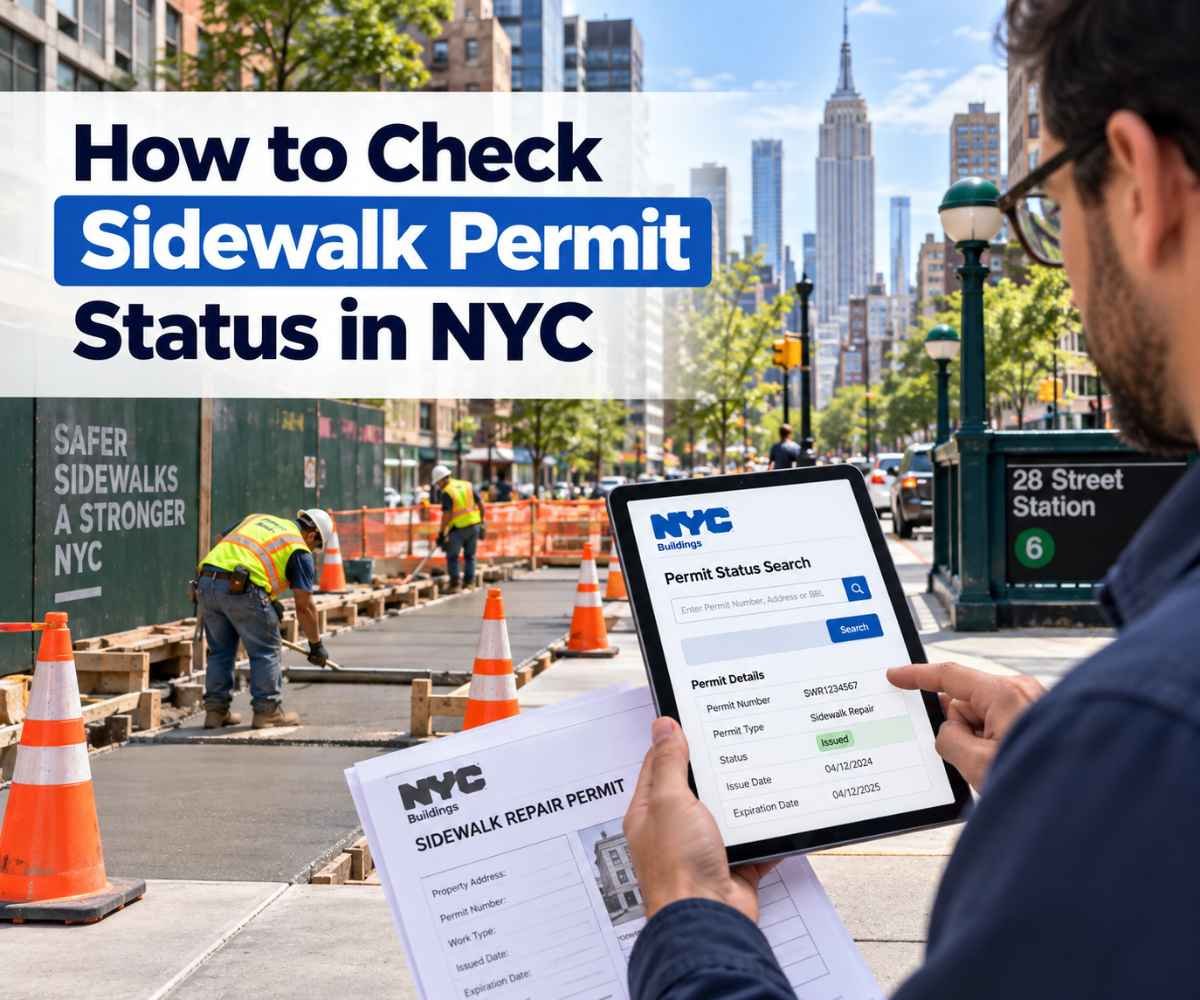

Yes. In New York City, you can check the status of an active sidewalk construction permit online through the NYC Department of Transportation's NYCStreets system.
The public permit search can show the permit number, permit type, current status, issue date, work dates, location, and permittee name. This makes it possible for a property owner to confirm whether a permit has been issued for sidewalk work at a specific location.
If your application is still being reviewed and a permit has not been issued yet, the process is slightly different. The contractor or other registered permittee who submitted the application can check it through the NYCStreets Permit Management System.
“Need help with a sidewalk permit or DOT violation in NYC? FY Sidewalk offers complete permit assistance, professional sidewalk repairs, and violation removal. We are licensed, have over 20 years of experience, and provide free estimates. Contact FY Sidewalk today.”
How to Check a Sidewalk Permit in NYC
NYC DOT provides an online Permit Search through NYCStreets. You do not need to rely only on paperwork from the contractor when checking an active permit.
You can use the system as follows:
-
Go to the NYCStreets Permit Search.
-
Enter the permit number if you have it. You can also narrow the search using location and other permit information.
-
Review the permit details shown in the results.
-
Check the permit status along with its issue date and work start and end dates.
The NYCStreets search page includes fields for permit number, permit type, permit status, issue date, valid dates, location, and permittee information.
NYC311 also directs property owners to NYCStreets when they want to check an active street or sidewalk construction permit.
What If My Sidewalk Permit Is Still Pending?
There is a difference between checking an issued permit and checking a permit application.
NYC DOT's public search is useful for finding permit records that have already entered the permit system. A contractor who applies online can also follow the application through the NYCStreets system used to submit the request.
NYC DOT states that registered permittees can use NYCStreets to apply for permits, make payments, and print permits online. The city's Street Works Manual also states that applicants who file online can return to the online system to check the status of their applications.
If you hired a sidewalk contractor, ask for the permit or application number. This makes it much easier to verify the job.
Once the permit is issued, your contractor should also be able to provide you with a copy.
Why Can't I Find a Permit That Was Just Issued?
A newly issued permit may not appear immediately in the public information available through NYC311.
According to NYC311, active permit location information includes permits issued through 5 p.m. on the previous business day. If a permit was issued very recently, it may be worth checking again after the system has updated.
You should also double-check the permit number and work location. A small error in the address or permit number can make the record harder to find.
If a contractor tells you that a permit has been approved, ask for the actual permit document rather than relying only on a verbal confirmation.
Is a Sidewalk Permit the Same as a Sidewalk Violation?
No. They are separate records.
A sidewalk construction permit gives authorization for sidewalk work to be performed.
A sidewalk violation is a notice from NYC DOT identifying sidewalk defects that need to be corrected.
This difference matters when you are checking your records online. If you are trying to find out whether construction work has been permitted, use the NYCStreets permit system.
If you are trying to check an existing sidewalk violation, request a copy, or follow up on a violation, NYC311 provides a separate sidewalk violation inquiry process. NYC311 asks property owners to provide the sidewalk violation number when possible.
Does Getting a Permit Remove a Sidewalk Violation?
Not by itself.
Getting the permit allows the repair work to move forward. The violation is not automatically cleared just because the contractor obtained a sidewalk permit.
After the required repairs are completed, a dismissal inspection must be requested when the work relates to an existing sidewalk violation. NYC311 states that the violation is removed after a DOT inspector confirms that the work was completed properly. The request should include both the sidewalk violation number and the sidewalk construction permit number.
This is an important final step. Property owners sometimes assume the violation disappears as soon as the concrete work is finished. The DOT inspection is what confirms that the cited defects have been corrected.
Can Sidewalk Work Start Before the Permit Is Issued?
Sidewalk repair work should not begin without the required NYC DOT permit.
NYC DOT states that a Sidewalk Construction Permit is required for sidewalk repairs, sidewalk replacement, and the installation of a new sidewalk. When a contractor is performing the work, the contractor applies through NYCStreets.
Before work starts, confirm that your contractor has the required permit and that the information matches your property. Checking this in advance can prevent problems once construction begins.
What Should I Do If I Still Cannot Find My Permit?
Start with your contractor. Ask for the permit number and a copy of the issued permit.
If you still cannot locate the record, you can contact NYC DOT's Permit Management Office or call NYC311 for assistance. NYC311 also provides information about active sidewalk permits and sidewalk violation inquiries.
Do not confuse a contractor's estimate, agreement, or permit application with an issued NYC DOT permit. They are not the same thing.
How Long Does a Sidewalk Permit Take to Issue?
For most applications, quickly. DOT says a full review typically takes one to two business days. Two things can stretch that:
-
You can submit and pay online at any hour, but review only happens during normal weekday Permit Office hours. An application filed Friday evening won't be reviewed until Monday.
-
Some work must be submitted in person at the central Permit Office, including work on all Manhattan streets and on critical streets in the other boroughs. A "hold" on the application can also delay release until it's resolved.
Plan for a few business days, not the same day.
How Long Is a Sidewalk Permit Valid?
Sidewalk construction permits are commonly reported as valid for 30 days. Contractor sources describe a 30-day validity period. The exact start and end dates appear on your permit and in the NYC Streets record, so treat those dates as the deadline rather than a general rule.
Check the end date before scheduling the pour. Concrete work depends on weather, curing time, and crew availability, and 30 days goes faster than it sounds.
What Happens If the Permit Expires Before the Work Is Done?
All work must be performed under an active permit at all times, so a permittee who won't finish in time must apply for a renewal before the permit expires. The options depend on timing:
-
Before expiration: Renewal requests can be submitted only for permits that haven't expired.
-
Up to 30 days after expiration: An expired permit can be reissued only within 30 days of expiring, and a reissued permit doesn't apply retroactively. Work done in the gap isn't covered.
-
More than 30 days after expiration: A new permit application is required.
If your contractor is running behind, ask about renewal early, not after the permit lapses.
Need Help With a Sidewalk Permit or Repair in NYC?
Handling sidewalk repairs in New York City involves more than pouring new concrete. The work must follow NYC DOT requirements. The correct permit must also be in place before construction begins.
FY Sidewalk helps New York City property owners handle sidewalk repairs with the local permit requirements in mind. If your property has damaged sidewalk slabs or an active sidewalk violation, our team can assess the area and help you understand the steps needed before work begins.
A properly permitted repair makes the process easier to document. It also helps you move toward resolving an existing DOT sidewalk violation when one is involved.